
AI Teammates in Video Games: How Smart NPCs Are Changing Multiplayer Forever. Multiplayer gaming has always been about teamwork, communication, and adapting to unpredictable situations. But as online games become more advanced, a new kind of teammate is starting to emerge: the AI teammate. Unlike the non-playable characters (NPCs) of the past, today’s smart NPCs are being designed to learn, react, and support players in ways that feel surprisingly human.
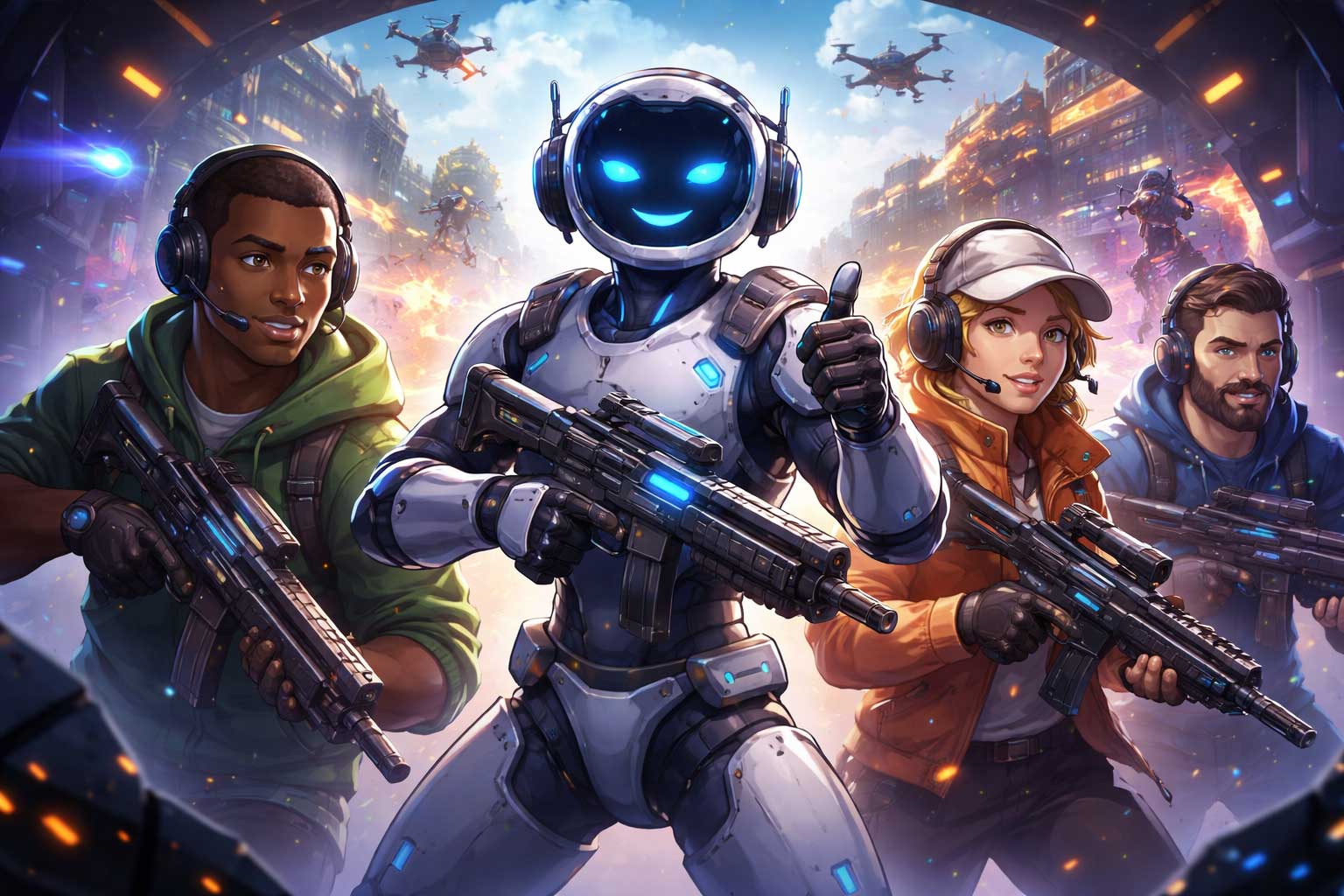
From cooperative shooters to large-scale battle games, AI teammates in video games could reshape how multiplayer works. They may help fill empty team slots, support solo players, reduce toxic player interactions, and even create more dynamic game worlds. As artificial intelligence continues to improve, smart NPCs are becoming one of the most exciting developments in modern gaming.
What Are AI Teammates in Video Games?
AI teammates are computer-controlled characters designed to work alongside human players. Traditional NPC allies usually follow simple scripts: attack when enemies are nearby, move to a checkpoint, or revive a player under fixed conditions. Smart NPCs, however, go much further.
Using advanced AI systems, these teammates can react to changing scenarios, interpret player behavior, and make better tactical decisions. In some cases, they may adapt to a player’s style over time, whether that means playing aggressively, offering defensive support, or focusing on healing and objectives.
How Smart NPCs Differ From Traditional NPCs
The biggest difference is adaptability. Older NPCs often felt predictable and repetitive. They might run into danger, ignore context, or repeat the same lines and actions. Smart NPCs are built to be more responsive.
Modern AI teammates may be able to:
- Follow strategic goals instead of fixed scripts
- Respond to voice commands or contextual pings
- Learn from player habits and preferred tactics
- Coordinate during combat more effectively
- Adjust difficulty and behavior in real time
This shift makes AI companions feel less like background code and more like actual teammates.
Why AI Teammates Matter in Multiplayer Games
The rise of smart NPCs is important because multiplayer games often struggle with a common problem: not every player has a full team available at all times. Matchmaking delays, disconnected players, skill gaps, and toxic behavior can all weaken the multiplayer experience.
AI teammates offer a possible solution.
Filling Gaps in Team-Based Gameplay
One of the clearest benefits of AI teammates in multiplayer games is their ability to fill missing roles. If a squad-based shooter loses a support player, an AI-controlled medic could step in. If a cooperative game needs one more teammate to start, a smart NPC could help complete the team.
This creates a smoother experience for players who want to jump into matches quickly without waiting for ideal team balance.
Supporting Solo Players
Not every gamer wants to rely entirely on strangers online. Some players enjoy multiplayer mechanics but prefer a more flexible or less stressful environment. Smart NPCs can give solo players access to team-based gameplay without forcing them into fully human squads.
This could be especially valuable in tactical shooters, survival games, and online role-playing games where cooperation is essential.
Reducing Toxicity in Online Matches
Toxicity remains one of the biggest complaints in online multiplayer gaming. Harassment, griefing, and verbal abuse can ruin a match. AI teammates cannot eliminate toxic communities entirely, but they can reduce dependence on random players in certain modes.
If players can choose to team up with reliable AI companions, they may avoid some of the frustration that comes from poor matchmaking or disruptive teammates.
How Smart NPCs Could Transform Multiplayer Gaming
As game developers continue experimenting with AI systems, the role of NPC teammates may expand well beyond simple support. Smart NPCs could fundamentally change how multiplayer games are designed.
More Dynamic Team Strategy
Imagine an AI teammate that notices your team is overcommitting to one side of the map and automatically shifts to defend an objective. Or a support NPC that recognizes your low-ammo situation and prioritizes supply drops. These are the kinds of responsive decisions that can make matches feel more alive.
In future multiplayer games, AI teammates may act as strategic partners rather than backup bots.
Personalized Gameplay Experiences
One of the most exciting possibilities is personalization. Smart NPCs could adapt to individual play styles. If you prefer stealth, the AI might move quietly and avoid unnecessary conflict. If you like aggressive pushes, it might provide suppressive fire or flanking support.
This level of customization could make multiplayer more accessible and enjoyable for different types of players.
Better Onboarding for New Players
Many multiplayer games have steep learning curves. New players often feel overwhelmed by complex mechanics, map knowledge, and team expectations. AI teammates could help by guiding players through objectives, demonstrating useful strategies, and providing support in early matches.
This would make multiplayer games easier to learn without sacrificing challenge for experienced players.
Challenges of AI Teammates in Multiplayer
While the future looks promising, there are still challenges to overcome. Building smart NPCs that feel believable, useful, and balanced is not easy.
Balancing Fairness and Skill
If AI teammates become too powerful, they could feel unfair or remove the human unpredictability that makes multiplayer exciting. If they are too weak, players will see them as useless. Developers need to create AI that is competent without becoming overpowered.
Avoiding Repetitive Behavior
Even advanced AI can become predictable over time if it relies on limited patterns. For AI teammates to remain engaging, they need varied responses, situational awareness, and the ability to behave naturally across many scenarios.
Preserving the Human Element
Multiplayer gaming is popular because of human interaction. Memorable wins, funny mistakes, and unexpected teamwork all come from playing with real people. AI teammates should enhance multiplayer, not replace the social core that makes it special.
The Future of Smart NPCs in Video Games
The future of AI teammates in video games looks incredibly promising. As machine learning, procedural behavior systems, and natural language processing improve, smart NPCs may become common in both cooperative and competitive titles.
What Players Can Expect Next
In the coming years, players may see:
- AI teammates that communicate more naturally
- NPCs that adapt across multiple matches
- Better squad coordination in online shooters
- Smarter companions in open-world multiplayer games
- Hybrid teams made up of both humans and AI allies
These innovations could make multiplayer gaming more flexible, inclusive, and immersive than ever before.
Conclusion
AI teammates in video games are no longer just a futuristic idea. Smart NPCs are quickly becoming a realistic part of modern multiplayer design. By filling team gaps, supporting solo players, reducing frustration, and creating more dynamic gameplay, they have the potential to change multiplayer forever.
At the same time, developers must carefully balance intelligence, fairness, and player expectations. The goal is not to replace human teammates, but to create smarter, more helpful companions that improve the overall experience.
As AI technology continues to evolve, one thing is clear: the next big shift in multiplayer gaming may not come from better graphics or larger maps, but from the teammates fighting right beside us.
